

CLICK ON THE IMAGERIES BELOW TO GET THEM ENLARGED

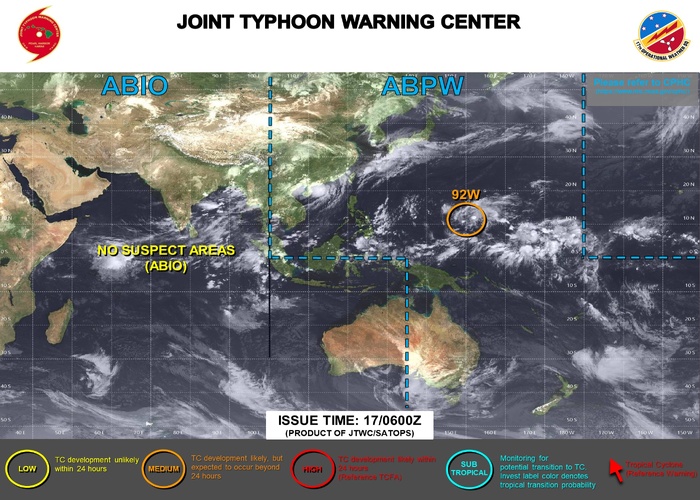
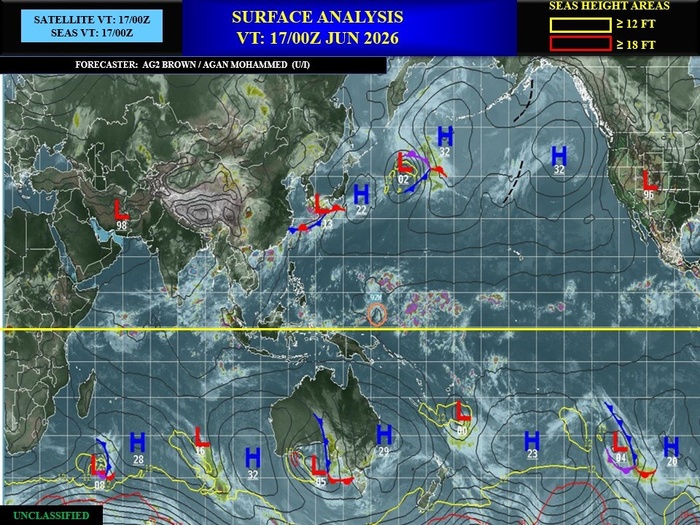
WESTERN PACIFIC: INVEST 92W. ADVISORY ISSUED BY JTWC @ 17/0600 UTC


ABPW10 PGTW 170600
MSGID/GENADMIN/JOINT TYPHOON WRNCEN PEARL HARBOR HI//SUBJ/SIGNIFICANT TROPICAL WEATHER ADVISORY FOR THE WESTERN AND SOUTH
PACIFIC OCEANS/170600Z-180600ZJUN2026//
RMKS/
1. WESTERN NORTH PACIFIC AREA (180 TO MALAY PENINSULA):
A. TROPICAL CYCLONE SUMMARY: NONE.
B. TROPICAL DISTURBANCE SUMMARY:
(1) THE AREA OF CONVECTION (INVEST 92W) PREVIOUSLY LOCATED NEAR 10.4N 154.4E IS NOW LOCATED NEAR 11.7N 151.6E, APPROXIMATELY 417 NM
EAST-SOUTHEAST OF GUAM. ANIMATED ENHANCED MULTISPECTRAL SATELLITE IMAGERY (EIR) DEPICTS BROAD CYCLONIC TURNING ASSOCIATED WITH INVEST 92W, ACCOMPANIED BY INTERMITTENT FLARING CONVECTION. THE SYSTEM REMAINS POORLY ORGANIZED, WITH AN ILL-DEFINED LOW-LEVEL CIRCULATION CENTER (LLCC) THAT MAY INSTEAD REPRESENT THE CUSP OF A LOW-LEVEL WAVE.
ENVIRONMENTAL ANALYSIS FOR THE AREA INDICATES CONDITIONS FAVORABLE FOR DEVELOPMENT, WITH LOW VERTICAL WIND SHEAR (10-15 KNOTS), MODERATE POLEWARD OUTFLOW ALOFT, AND WARM SEA SURFACE TEMPERATURES (29-30 C). AS THE SYSTEM IS CURRENTLY WEAK AND DISORGANIZED, THE PACE OF DEVELOPMENT WILL LIKELY BE SLOW IN THE NEAR TERM. DETERMINISTIC MODELS ARE CONSISTENT WITH THIS ASSESSMENT, SHOWING VERY GRADUAL DEVELOPMENT OVER THE NEXT 48 HOURS, AND ARE SPLIT ON WHETHER A TROPICAL CYCLONE WILL FORM
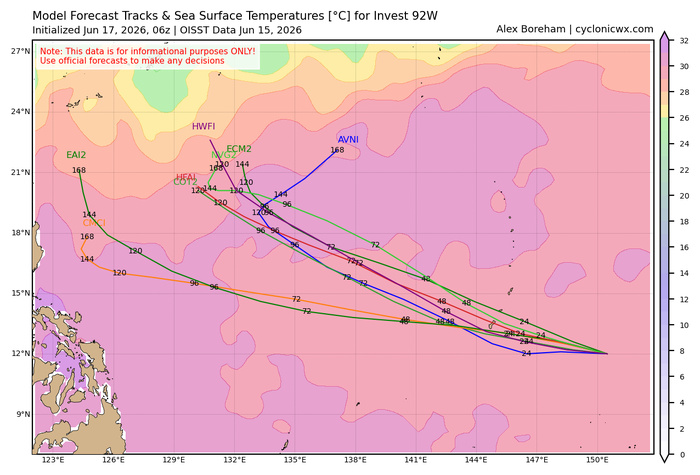
BY THAT TIME. GLOBAL MODELS AGREE ON A GENERALLY WEST-NORTHWESTWARD TRACK, TAKING THE SYSTEM INTO THE VICINITY OF THE SOUTHERN MARIANA ISLANDS. THE EXACT TRACK WILL DEPEND ON WHERE A WELL-DEFINED LLCC ULTIMATELY CONSOLIDATES. MAXIMUM SUSTAINED SURFACE WINDS ARE ESTIMATED AT 18 TO 23 KNOTS. MINIMUM SEA LEVEL PRESSURE IS ESTIMATED TO BE NEAR
1008 MB. THE POTENTIAL FOR THE DEVELOPMENT OF A SIGNIFICANT TROPICAL CYCLONE WITHIN THE NEXT 24 HOURS REMAINS MEDIUM.
MSGID/GENADMIN/JOINT TYPHOON WRNCEN PEARL HARBOR HI//SUBJ/SIGNIFICANT TROPICAL WEATHER ADVISORY FOR THE WESTERN AND SOUTH
PACIFIC OCEANS/170600Z-180600ZJUN2026//
RMKS/
1. WESTERN NORTH PACIFIC AREA (180 TO MALAY PENINSULA):
A. TROPICAL CYCLONE SUMMARY: NONE.
B. TROPICAL DISTURBANCE SUMMARY:
(1) THE AREA OF CONVECTION (INVEST 92W) PREVIOUSLY LOCATED NEAR 10.4N 154.4E IS NOW LOCATED NEAR 11.7N 151.6E, APPROXIMATELY 417 NM
EAST-SOUTHEAST OF GUAM. ANIMATED ENHANCED MULTISPECTRAL SATELLITE IMAGERY (EIR) DEPICTS BROAD CYCLONIC TURNING ASSOCIATED WITH INVEST 92W, ACCOMPANIED BY INTERMITTENT FLARING CONVECTION. THE SYSTEM REMAINS POORLY ORGANIZED, WITH AN ILL-DEFINED LOW-LEVEL CIRCULATION CENTER (LLCC) THAT MAY INSTEAD REPRESENT THE CUSP OF A LOW-LEVEL WAVE.
ENVIRONMENTAL ANALYSIS FOR THE AREA INDICATES CONDITIONS FAVORABLE FOR DEVELOPMENT, WITH LOW VERTICAL WIND SHEAR (10-15 KNOTS), MODERATE POLEWARD OUTFLOW ALOFT, AND WARM SEA SURFACE TEMPERATURES (29-30 C). AS THE SYSTEM IS CURRENTLY WEAK AND DISORGANIZED, THE PACE OF DEVELOPMENT WILL LIKELY BE SLOW IN THE NEAR TERM. DETERMINISTIC MODELS ARE CONSISTENT WITH THIS ASSESSMENT, SHOWING VERY GRADUAL DEVELOPMENT OVER THE NEXT 48 HOURS, AND ARE SPLIT ON WHETHER A TROPICAL CYCLONE WILL FORM
BY THAT TIME. GLOBAL MODELS AGREE ON A GENERALLY WEST-NORTHWESTWARD TRACK, TAKING THE SYSTEM INTO THE VICINITY OF THE SOUTHERN MARIANA ISLANDS. THE EXACT TRACK WILL DEPEND ON WHERE A WELL-DEFINED LLCC ULTIMATELY CONSOLIDATES. MAXIMUM SUSTAINED SURFACE WINDS ARE ESTIMATED AT 18 TO 23 KNOTS. MINIMUM SEA LEVEL PRESSURE IS ESTIMATED TO BE NEAR
1008 MB. THE POTENTIAL FOR THE DEVELOPMENT OF A SIGNIFICANT TROPICAL CYCLONE WITHIN THE NEXT 24 HOURS REMAINS MEDIUM.


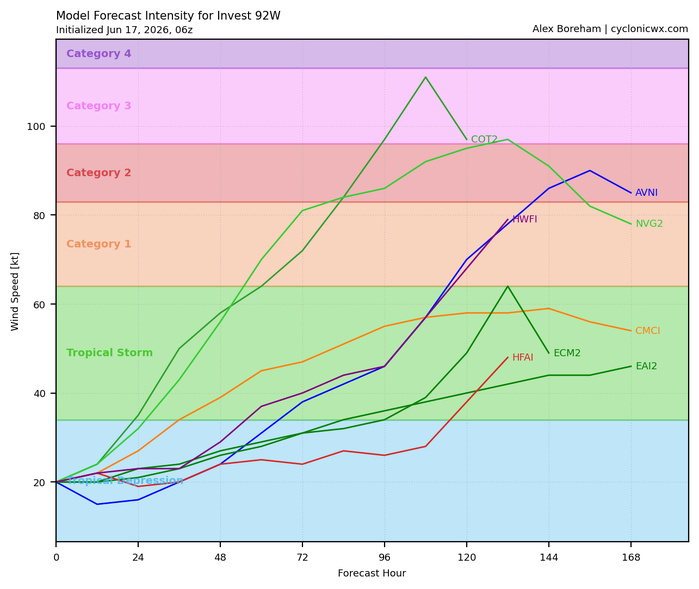
AI Model Track Forecasts

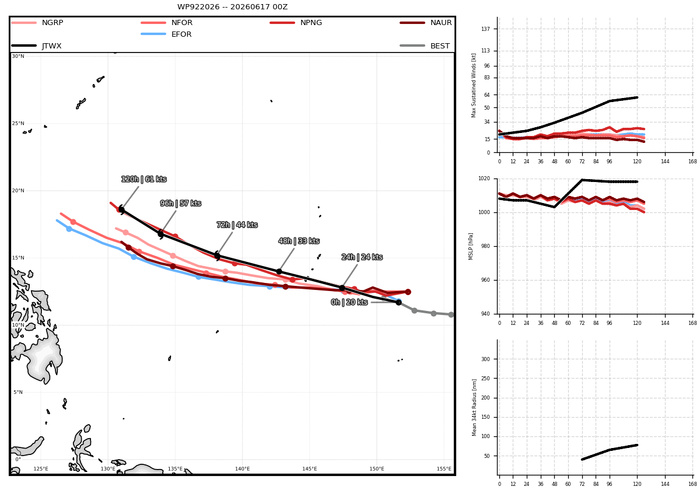

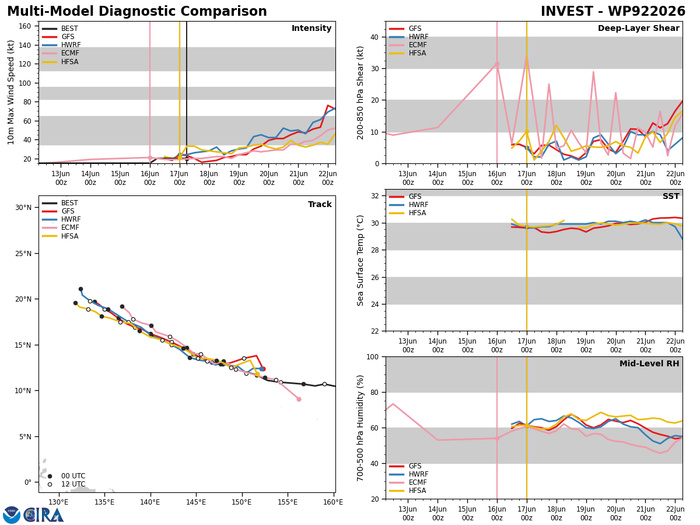
Storm Track

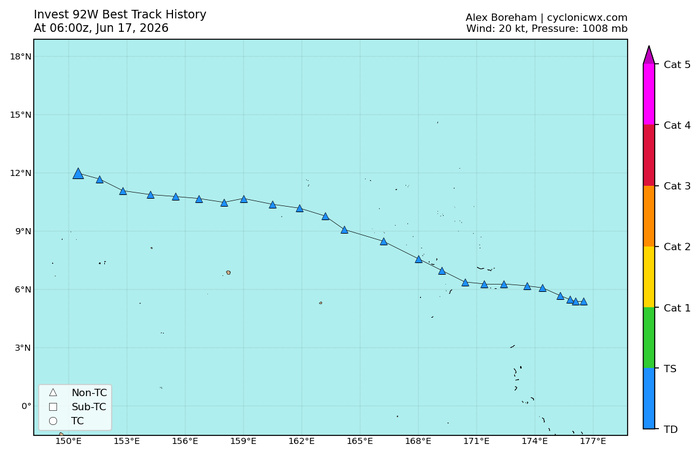
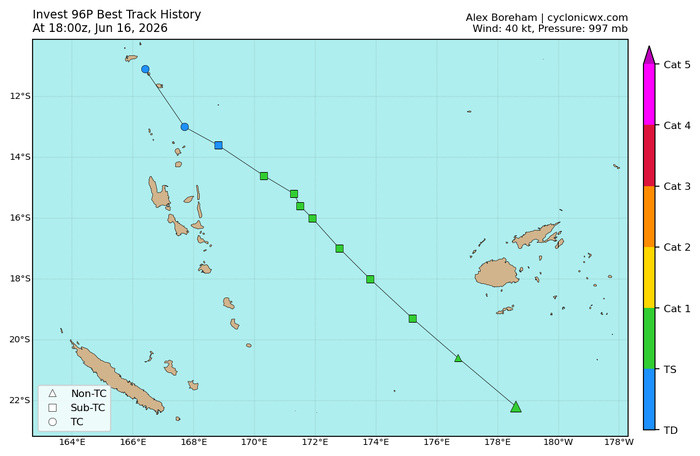
SOUTH PACIFIC OCEAN: INVEST 96P. ADVISORY ISSUED BY JTWC @ 17/2000 UTC


THE AREA OF CONVECTION (INVEST 96P) PREVIOUSLY LOCATED NEAR 20.6S 176.7E HAS TRANSITIONED INTO AN EXTRA-TROPICAL, COLD-CORE LOW AND IS NO LONGER SUSPECT FOR THE DEVELOPMENT OF A SIGNIFICANT TROPICAL CYCLONE IN THE NEXT 24 HOURS.
Storm Track


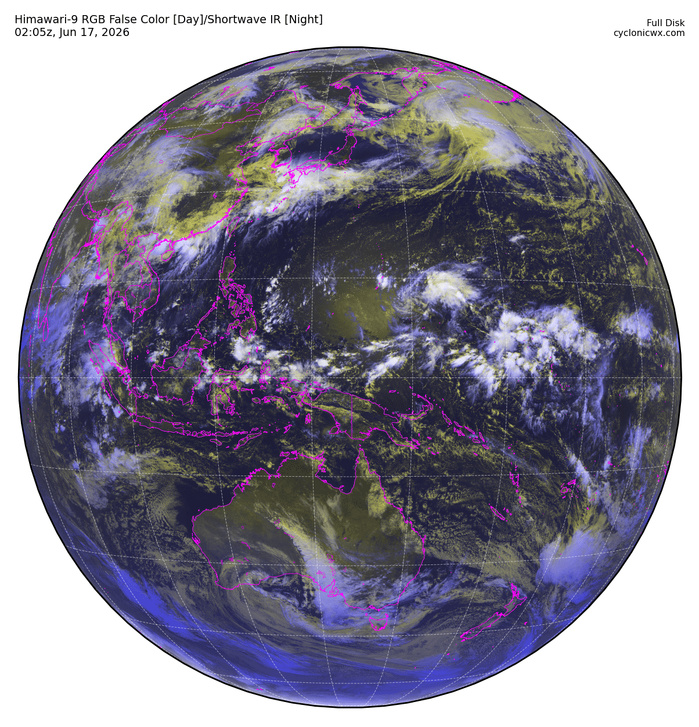
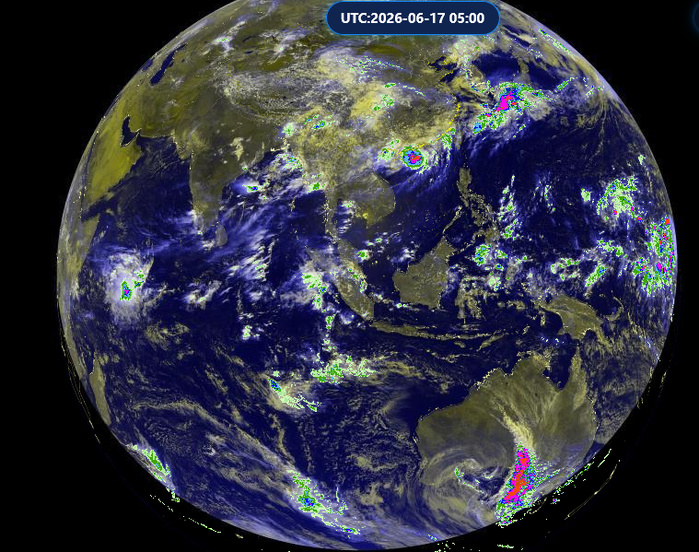
17/0500 UTC FY4-B 16KM


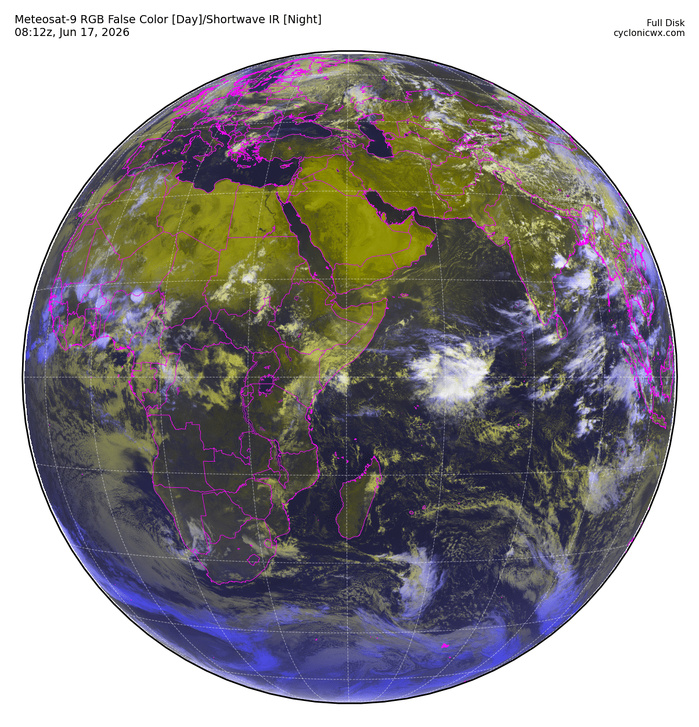


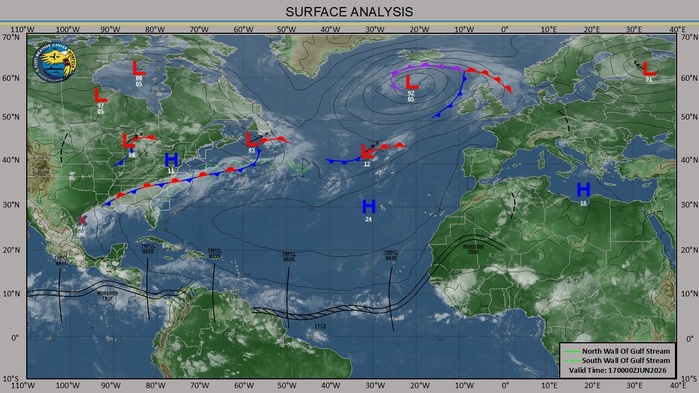


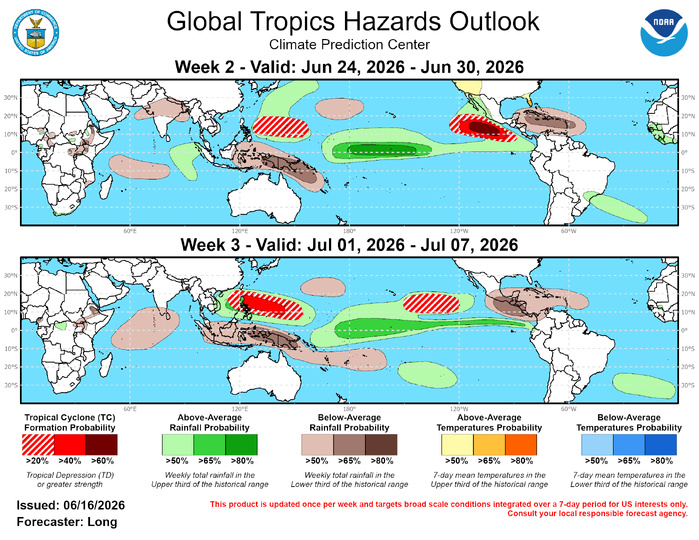
GTH Outlook Discussion Last Updated - 06/16/26 Valid - 06/24/26 - 07/07/26 Over the past week, the Madden-Julian Oscillation (MJO) continued moving eastward into the Western Hemisphere (Phase 8). However, the signal has begun to weaken now that it has moved away from the low-frequency base state in the eastern Pacific, which is starting to dominate the tropical convective pattern. The upper-level velocity potential anomalies show a breakdown of the wave-1 pattern during the past week as the MJO signal attempts to propagate into the Indian Ocean. During Week-1, models depict a weak signal quickly crossing the Indian Ocean and Maritime Continent, driven by equatorial Rossby Wave activity. Meanwhile, a stronger, secondary signal remains anchored in the Pacific, associated with the low-frequency base state. By Weeks 2 and 3, the weaker MJO signal is again absorbed by the dominant low-frequency convective signal in the Pacific, with a wave-1 pattern reemerging. As the two constructively interfere, the overall signal strengthens heading into Week-3. In RMM-space, this translates into a retreat into the unit circle as the signal retrogrades and then reemerges in Phase 6 during Week-3. After an active period featuring three tropical cyclone (TC) formations in the Eastern Pacific two weeks ago, activity quieted down over the past week with no new developments. However, the National Hurricane Center (NHC) is currently posting advisories on Potential Tropical Cyclone (PTC) One just along the Texas coast which, regardless of further tropical development, is expected to bring heavy rainfall and possible flooding to the southeastern United States, stretching from Texas to Georgia. The NHC is also monitoring an area in the Eastern Pacific between 140-125 degrees W for possible TC formation. To the west, the Joint Typhoon Warning Center (JTWC) is watching an area in the Western Pacific between 140 degrees to 155 degrees East (Invest 92W) for potential development. For further updates on PTC One and future TC formations, please refer to the NHC at https://www.nhc.noaa.gov/ and the JTWC at https://www.metoc.navy.mil/jtwc/jtwc.html. During Week-2, there is a greater than 60% chance of TC formation in the Eastern Pacific as the MJO signal reemerges in the Pacific. Models show high confidence for development in the region, driven by decreased wind shear and possible equatorial Rossby Wave activity. In the Western Pacific, conditions are also favorable for a TC to form behind Invest 92W, where a 20-40% chance of formation has been issued. As the MJO signal strengthens during Week-3, the likelihood of TC formation in the Western Pacific increases to 40-60%, with strong support from MJO TC composites. A 20-40% chance of formation is also posted for the central Pacific, spanning from 150 to 120 degrees West. Although this region is typically quiet this early in the season, development may be triggered by the reemerging MJO signal and the unseasonably warm SSTs associated with the current El Nino.


The precipitation outlook for Weeks 2 and 3 is based on the skill weighted consolidated blend of GEFS, CFS, and ECMWF ensemble forecast systems, historical composites during May-Jul for MJO phases 6-7, and the emerging El Nino influence. Below-average rainfall is expected to continue over the Indian Ocean, the Maritime Continent, and the Caribbean Sea. Above-normal rainfall is expected across the equatorial Pacific and the North Western Pacific in association with possible TC activity. In the eastern Pacific, there is also an increased chance for above normal rainfall associated with possible TC activity during Week-2. Increased chances for above-normal temperatures are expected for the western United States and southern Florida during Week-2. For hazardous weather conditions in your area during the next two weeks, please refer to your local NWS office, the Medium Range Hazards Forecast from the Weather Prediction Center (WPC), and the CPC Week-2 Hazards Outlook. Forecasts issued over Africa are made in coordination with the International Desk at CPC.